Fields of Practice.
Task 3:
This week's challenge consists of two different parts. The first part explores the categories of D&AD award winners in 2023, and the second part is about breaking the boundaries of graphic design. We are asked to research, produce, and reflect upon our readings. I am excited to get inspired by award-winning graphic designers and learn new techniques for approaching design. However, this process will be intimidating as it involves heavy contextual research and critical thinking.
Part 1: D&AD Award winners
Explore the categories of the D&AD award winners in 2023.
Consider how this impacts my views of design terminology, and consider the overlaps and points of change, difference and similarity.
Write a 500-word synopsis on my blog, demonstrating further reflection.
Part 2: Breaking the Boundaries of Graphic Design
Consider classic design models and definitions and what breaks these boundaries. We believe in graphic design as a term, but what areas do I believe fit under the umbrella of graphic design?
Branding, Type designer, Editorial design, Interactive design, Web design, Speculative design, Graphic artist
Choose a piece of design that breaks definitions of design practice and write a paragraph describing this practice.
Come up with a new term that describes this area of work.
Learning objectives:
Research, analyze, and explore the terminology and language we use in graphic design.
Imagine through my research a new term for a selected piece of design that breaks definitions of design practice.
Communicate clearly through my forum and blog and comment on my fellow students’ work in relation to different fields of practice.
Participate in and reflect upon debate on the ideas wall.
Manage my independent learning through good planning and self-direction.
Part 1: D&AD Award winners:

Browsing through the D&AD Awards, I was astounded by the creativeness and imagination within the design world. I have always been a fanatic of editorial design and typography. However, I recently worked with a bookbinder, creating different types of books, learning new methods, and paying extra attention to tiny details that only I would notice. Therefore, I have formed a deep connection with book design, and I aspire to continue working in the field.
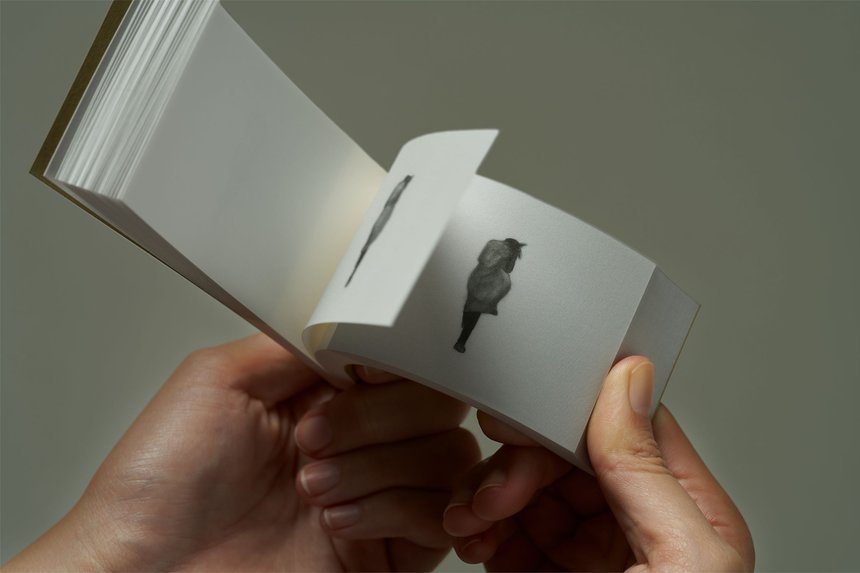
Walk, Walk, - illustration category


D&AD Awards have provided a stimulating experience for me, introducing me to various design concepts and unique techniques that broadened my definition of art and design. Initially, I was overwhelmed by the vast array of categories available, so I narrowed my search to five that I am particularly interested in.
Book Design
Typography
Illustration
Photography
Animation
The design world is constantly evolving. It's hard to stay up-to-date with all the new tech and stay relevant. I've always seen traditional art as a natural skill. Using your hands as the tool is much more complex and challenging than just clicking an "undo" button. You can't learn from your mistakes if you can't undo every mistake. So I've decided to create a category that covers all the overlapping points of change in the design world - combining traditional art with modern conceptual art.
Walk, Walk, is an award-winning D&AD project communicating a strong message of a world of climate change, conflict, economic uncertainty, and a pandemic; brand-building can feel like walking alone on a long, lonely road. Whether you want to promote your brand, increase brand awareness, sell products, or reach out to your target audience to build a relationship, brand-building can take a lot of work. Hence, in Walk, Walk, the campaign visualizes the struggles and triumphs of this journey and reminds us that all brands go through it uniquely. They used traditional art methods of hand-drawn illustrative images and frame-by-frame animation to capture the daily hustle and bustle of brand building. They aimed to encourage brands with optimism and resolve, reminding them they are not alone on this seemingly lonely road.
After carefully researching and analyzing the "Walk, Walk," project, I focused mainly on the frame-by-frame animation era's moments of transition and evolution. Fantasmagorie was the first animated film made by Émile Cohl in 1908. According to film historians, Fantasmagorie is the first animated cartoon in history. To create the film, Cohl began by placing each drawing on a glass plate illuminated with light, then tracing the next drawing, with variations on top, until he had approximately 700 drawings. It isn't easy to comprehend the amount of time and effort that Cohl put into creating a single frame-by-frame animation. But things have changed a lot since the mid-20th century when animating frame by frame was the only way to make animation. It's not necessary anymore, but many animators still do it, and they only do it for one reason: to copy the old-school style of hand-drawing animation. Nowadays, most animation is done with CG or computer graphics. Frame rate, or how many images are shown in a second, gives the illusion of smooth motion.
Personal Project Inspiration:
The video process:
The final outcome:
After reading and writing about the "Walk, Walk," I felt inspired to try something new and out of my comfort zone; however, I didn't want to waste time using the same technique of hand-drawn illustrations and frame-by-frame animation they used. Therefore, I used my IPad to create the same outcome in a less time-consuming period.
Part 2: Breaking the Boundaries of Graphic Design:
Webinar - Collaborative Manifesto:

Today's lecture caught me off guard. I am drawn to interactivity and things that enable me to reflect, design, and push myself out of the box. I am shy when it comes to making presentations or speaking openly. However, this simple exercise made me feel so energized. We were tasked with creating a group Manifesto by selecting ten words describing how we view design. Most of the responses were similar but different. Many people talk about design being a source of communication, but each person has their own way of defining it. I learned many new terms I had not heard before. It was exhilarating. In addition, I selected the words 'controlled'’ 'global,' and 'one' to articulate what design means to me.
Control is not in the sense of being able to influence or direct the behaviour or events of others. My control over the graphical elements (such as type, colour, layout, and size) will enable the user to choose what they perceive and experience in their own manner. I cannot design something and expect the user to perceive and experience it as I do. Everyone perceives and experiences things differently. Moreover, design is a global phenomenon due to its focus on accessibility rather than a single market segment. Anyone can recognize a company's logo, and anyone, simply by its signage, can follow a street sign. That is all design. Design is one; it is everything and everywhere.
The 10 types of graphic design practices:


-
Book design is about bringing different parts of things into one cohesive whole. It is about integrating the contents, style, form, layout, and order of the various elements and components. It's how the text looks, how it's written, how it's formatted, and how it's organized. The book design process is a meticulous and well-organized therapeutic approach to my body and soul. As a book design enthusiast, I aspire to someday pursue a book design career.
-
Type design is all about telling a story. It's about spelling out actual words and evoking emotions with style. It's about personality, conveying a message, and getting the attention of the viewer by setting the tone for a brand. I love designing typefaces that make the letters come alive. Typography is something that will never go out of style. It's the foundation of our language and how we communicate. I have created six distinct typefaces, each with its own structure, message, and purpose. I intend to continue developing and learning more about typography and lettering, as there is still much to be discovered.
-
I am a visual person who reacts more quickly, intelligently, and effectively to images, photos, paintings, sketches, graphs, et cetera. My first goal in making an illustration is to enable the image to communicate with the reader without any verbal communication. Reading books with visual elements helps me to recall and comprehend what I am reading. This is why illustration is so important to me.
-
I always thought magazines and newspaper design fell under the book design category; interestingly, they don’t. The primary distinctions and similarities between magazine and newspaper design are that they both involve the arrangement and styling of words and pictures on a printed page through the use of a system of lines and columns, which serve as order and structure. However, the material, paper, and colour palette used are diverse. Although I use a newspaper as part of an arts and crafts project, a magazine is something that I would read and enjoy. I am more drawn to bright colours and exciting paper textures. The structure of a newspaper is rather monotonous in comparison to a magazine.
-
I have always wanted to learn how to animate, but I never had the courage to do so. I was intimidated by the Adobe animation applications I had seen. I attempted to animate one time, but my patience was wearing thin. After researching and writing a synopsis for an illustrated animation, I attempted to create a short animated stop motion. This was after researching and writing about the "Walk, Walk," animation in the previous posts. Even though I am still not enjoying the process, I am pleased with the result. I enjoy observing the growth and development of animation.
-
Photography is an integral part of design. I cannot imagine my life without it. Through the art of photography, I can capture moments that I wish to reminisce and relish. It is truly remarkable how much the photography industry has evolved throughout the years. I have digital camera experience and intend to learn and expand my knowledge in the near future.
-
I discovered that Product design is the development of ideas, creating and improving products that meet the market's needs, and resolving user problems. I have always considered product design a mix of editorial and engineering design. Their goals are similar, product reliability, high-quality design elements, user experience and competitive alternatives. I never tried creating and designing a product, but it is on my bucket list.
-
It irritates me when people assume that I specialize in brand identity due to my background as a graphic designer. It is often assumed that every graphic designer can create a logo; however, learning the various design categories is necessary. I do not consider myself a brand identity designer, and I do not enjoy creating a logo. I am capable of brainstorming, sketching and generating concepts. However, I do not personally design logos. I look at graphic design from a broader perspective; it is more than just a logo; it is what follows after it. The logo is the foundation of a business; however, I design the company's products, services, publications, brochures, posters, and websites.
-
Initially, I mistakenly believed that packing design was different from product design. However, recently, I have understood that product design focuses on the product itself rather than the packaging in which it will be placed. Package design intends to protect and contain the product. In addition, I recently designed a package for a client that could have gone much better. I had a creative idea for the product design, yet I should have considered my client's needs, resulting in my package being passed over.
-
When I first saw a category of graphic design, I was confused. All these porous types of design fell under the same tree. But graphic design is, on its own, something worth exploring. I define graphic design as the process and practice of organizing and conveying ideas and experiences through visual and textual material. It unifies all the elements of form, colour, geometry, form, lines, values, and textures. I love graphic design because it’s my language.
Case Studies:
“The Effect of Globalisation on Design”

Simon Manchipp
What do they mean by globalisation? I asked myself. Globalisation refers to the fact that the world is more interconnected and connected through trade and technology. Globalisation also relates to the changes in the economy and society. I have always understood that the word global comes from the "globe", as in the world", so it instantly clicked. Moreover, the first thing Simon Manchipp said was that the negative aspects of globalisation allow for the modernisation of thinking, promote greater cooperation and more important ideas, and allow different cultures to share knowledge with each other; his way of describing how globalisation impacts design resonated with me because I've worked with different cultures, which has broadened my experience, communication skills, and personality. He also highlights the advantages of using social media platforms, noting that they play a beneficial role in connecting people and disseminating different perspectives.

Harriet Ferguson
Harriet Ferguson from Pearlfisher discusses how graphic design is used worldwide and in different industries. She's the head designer at a creative design & branding agency called Pearlfisher. They recognise the importance of the brand narrative and are always looking for new and innovative ways to help brands reach their target audience by creating a distinct visual identity. I had a good time watching her video and admiring the eye-catching designs she has created. At Pearlfisher, collaboration is at the heart of what Harriet does. Personally, sometimes I like working with others to make new, varied, and original designs; but I also like to have a few projects to myself to show what I'm really like as a designer; so it was exciting to see Pearlfisher have four offices (London, NY, SF, and CZ) where they all work together to inspire and educate each other, using cross-cultural references to create work that speaks to a global audience.
Self Reflection:
What is the scope, and what are the boundaries of graphic design today? Current and future?
We were asked to answer this question at the beginning of this week's challenge, and after careful research and consideration, I did. This week's challenge was exciting yet exhausting. The D&AD awards interested me the most. I felt like I was in an art & design gallery. The distinctive award-winning designs opened my mind and encouraged me to start dreaming because dreams do come true. Even though it was stimulating watching all these new art and design masterpieces, it was too tedious to write about them.
References:
D&AD Awards 2023:
SEKIDO, Kimiko, Hirotoshi IWASAKI and Manabu KIMURA. 2023. ‘Walk, Walk’,. Walk, Walk, | D&AD Awards 2023 Shortlist | Integrated | D&AD [online]. Available at: https://www.dandad.org/awards/professional/2023/236826/walkwalk/ [accessed 14 Jun 2023].